

Laser vs Subcision vs Punch Excision: Which Works Best?
If you’ve lived with acne scars for years—those dimples, pits, or tethered depressions—you’re likely tired of topical remedies, microneedling, or peels that only scratch the surface. You want a lasting solution—one built for deeper repair. But with options like laser resurfacing, subcision, and punch excision on the table, how do you know which acne scar treatment is right for you?
In this guide, led by Dr. Richard Sadove and The Acne Scar Center’s clinical team, we’ll break down the science, indications, trade-offs, and real-life outcomes of each method. Think of this as your decision roadmap—so you and your surgeon can choose the path that aligns with your scar type, skin goals, and tolerance for downtime.
Understanding Acne Scar Types & Why Treatment Must Be Tailored
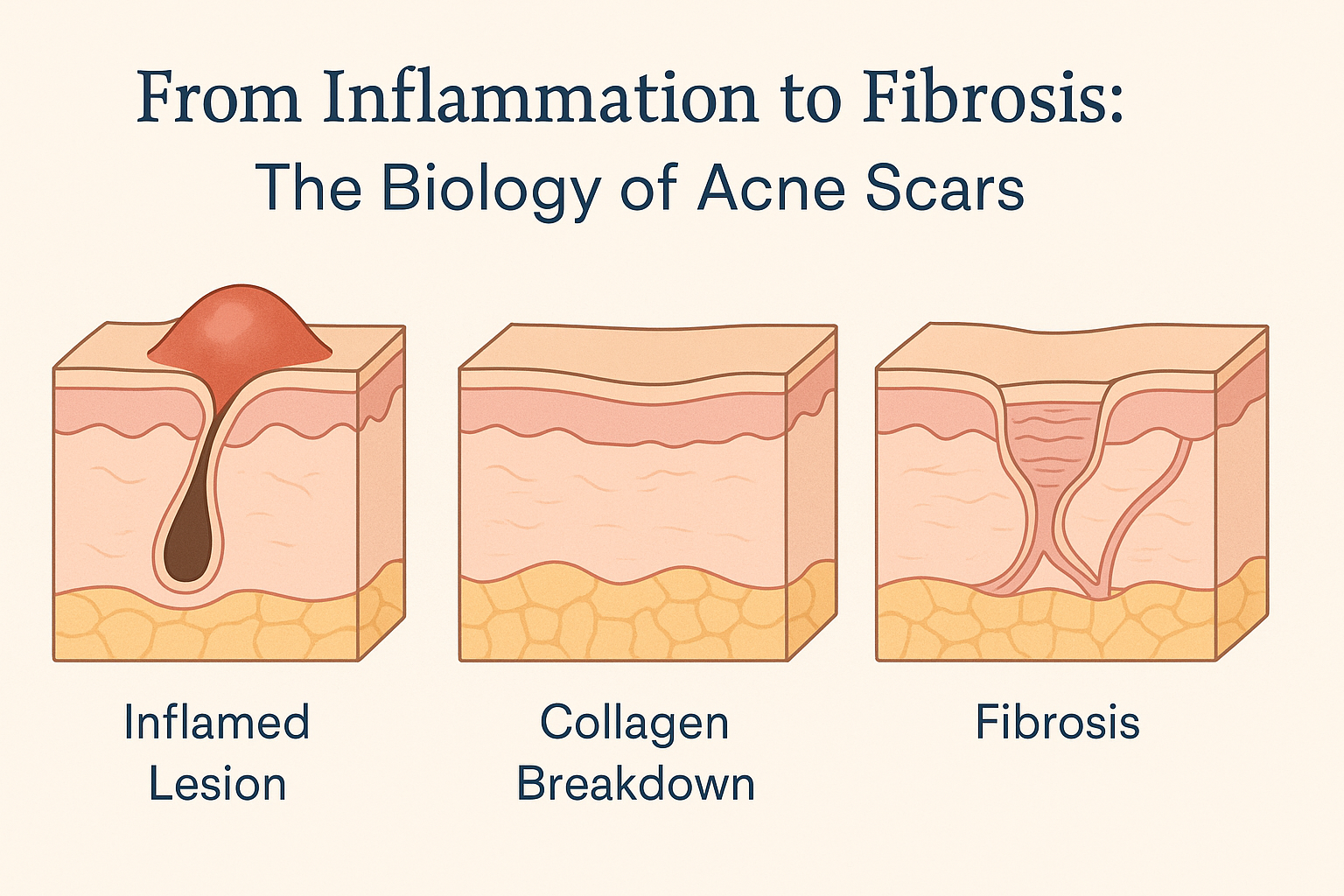
Acne scars are not one-size-fits-all. Effective repair starts with precise diagnosis.
- Atrophic (depressed) scars – the most common in adult acne sufferers. These include:
• Ice-pick scars: narrow, deep, V-shaped.
• Boxcar scars: wider with sharp edges and flat base.
• Rolling scars: soft undulating waves tethered to deeper tissue. - Hypertrophic or keloid scars (less common in typical acne) involve raised, overgrown tissue and are treated differently.
Why does type matter? Because:
- Laser resurfacing works best where the major issue is surface irregularity, texture, and moderate depth.
- Subcision addresses scars tethered by fibrous bands—that “pull-down” effect.
- Punch excision is often reserved for deep, narrow defects (especially ice-pick or narrow boxcar) that cannot reliably remodel by non-surgical methods alone.
At The Acne Scar Center, we often combine these techniques for optimal results.
Laser (Resurfacing) — Mechanism, Pros & Limitations
How it works
Laser resurfacing uses light energy to ablate or thermally stimulate layers of skin. In doing so, it triggers controlled wound healing and collagen remodeling to smooth and elevate depressed scars. Fractional CO₂ and other ablative lasers are common in advanced acne scar repair.
Source: American Academy of Dermatology
Benefits & ideal use cases
- Smooths fine texture irregularities left after surgical scar revision
- Improves pigmentation, skin tone, and collagen matrix
- Works well on broad, shallow scars
Risks, downtime & skin-type considerations
- More aggressive lasers carry higher risk of prolonged redness, redness, swelling, and post-inflammatory hyperpigmentation (especially in darker skin types)
- Downtime can stretch 5–10+ days (flaking, crusting)
- Requires expert technique and priming for safe results
When laser alone is likely insufficient
Deep, narrow ice-pick scars and tethered rolling scars often resist pure resurfacing. In many cases, lasers supplement but don’t replace surgical methods.
Subcision — The “Release” Method for Tethered Scars
What is subcision?
Also called subcutaneous incisionless surgery, subcision inserts a needle, cannula, wire, or blunt blade under the depressed scar to mechanically release the fibrous tethers pulling the skin downward. Source: PubMed Central review on subcision efficacy
Once released, the lifting effect is aided by natural wound healing and collagen deposition. Some use adjunct fillers or biologics to “fill” the lifted space.
Best candidates & outcomes
- Particularly effective for rolling scars where tethering is the root cause
- Some combined success in partial improvement of shallow boxcar scars—but not effective for ice-pick scars when used alone
Advantages & limitations
- Minimal downtime relative to full laser
- Can be repeated and combined with other modalities
- Limited ability to treat surface texture or pigment on its own
Risks & realities
- Bruising, swelling, transient bleeding
- Incomplete lifting or re-tethering over time
- Some patients report underwhelming results (as with any technique)
Punch Excision (and Related Punch Techniques)
What is punch excision?
Punch excision removes deep, narrow scars entirely using a circular blade, converting them into controlled linear scars that can later be blended by resurfacing. Source: Cleveland Clinic – Acne Scar Treatments
Punch elevation is a variant: the floor of the scar is lifted and reattached flush with the surrounding skin before closure.
Punch grafting may also substitute scar tissue with a small graft (e.g. from behind the ear).
Ideal scars for punch techniques
- Deep ice-pick scars and narrow boxcar scars with well-defined walls
- Scars located in areas where linear closure yields acceptable cosmetic result
Benefits & trade-offs
- Converts deep, resistant pits into smaller linear scars that are easier to camouflage and refine via laser or resurfacing
- Often used as a first-stage method before resurfacing
- Leaves new linear scars, which may be improved further
Risks, healing, and precautions
- Localized risks: stitch line widening, wound dehiscence, pigment difference, hypertrophic scarring
- Healing—sutures may remain 5–7 days; full maturation can take months
- Must space excisions appropriately to avoid skin tension
See how Dr. Sadove’s surgical acne scar techniques address deep scars other methods can’t.
Choosing the Right Approach — Decision Factors for Patients & Surgeons
Here’s how we decide which tool (or combination) is ideal:
- Scar morphology
- Rolling scars → subcision + resurfacing
- Boxcar (moderate width) → mixed approach
- Ice-pick or narrow deep defects → punch excision + resurfacing
- Skin type / pigmentation risk
Aggressive resurfacing in darker skin types requires priming and caution for hyperpigmentation.
- Downtime tolerance & expectations
More invasive methods = more downtime. Patient’s lifestyle and healing capacity matter.
- Desire for a single “big” result vs staged plan
Many patients do better with phased combination therapy—first disrupt the deepest tethering (via punch or subcision), then refine with laser.
- Surgeon experience & facility capability
Outcomes depend heavily on surgeon expertise in scar revision and access to multiple modalities under one roof—one reason The Acne Scar Center integrates these techniques in-house.
You can start with a Virtual Acne Scar Consultation to determine which combination of treatments will yield the best results for your unique scar types.
Recovery, Follow-up & Patient Experience
Post-procedure timeline (typical)
| Procedure | Early Recovery | Weeks 2–4 | Months 1–3+ |
| Laser | Redness, crusting, flaking | New skin emerges, avoid sun | Collagen remodeling, visible smoothing |
| Subcision | Bruising, swelling | Subsiding, gentle skincare | Continued lift and remodeling |
| Punch Excision | Suture line, topical care | Scar maturation begins | Scar refinement and laser blending |
Follow-up & maintenance
- Multiple sessions may be required
- Sunscreen, scar care protocols, topical support
- Touch-ups or adjunctive treatments (filler, CROSS, micropen) may be recommended
Emotional journey & managing expectations
Expect improvement, not total erasure. The skin is healing and remodeling for many months. Some residual shallow irregularities may persist, but these are far more treatable.
At The Acne Scar Center, we counsel patients extensively so they understand realistic endpoints and feel supported at every stage.
Benefits & Risks Summary Table
| Method | Major Benefits | Limitations & Risks |
| Laser (resurfacing) | Smooths surface, improves tone & texture, collagen stimulation | Post-inflammatory hyperpigmentation, downtime, not suited for deep tethered defects |
| Subcision | Releases tethered, rolling scars, minimal invasiveness | Limited texture improvement, possible recurrence, bruising |
| Punch Excision / Elevation | Converts deep pits into manageable scars, works where others can’t | Leaves scars, healing time, scar widening, must be carefully placed |
If you’re struggling to decide which method—or combination—can deliver the most reliable result for your acne scars, schedule a Virtual Acne Scar Consultation with Dr. Richard Sadove and the team. We’ll review your clinical photos, scar types, and lifestyle priorities to map out a personalized repair plan. Click here to Book your Virtual Acne Scar Consultation.
FAQs
Q1: Can laser alone fix deep acne pits?
A1: Not reliably. Deep, narrow scars often persist after resurfacing. Many patients benefit from surgical techniques (like punch excision or subcision) combined with laser for optimal smoothing.
Q2: Is subcision painful or risky?
A2: Discomfort is typically minimal (local anesthesia used). Temporary bruising and swelling are common. Serious complications are rare when done by an experienced surgeon.
Q3: How many treatments will I need?
A3: It depends on scar depth, number, and skin response. Many patients see meaningful improvement after just 1 treatment, sometimes with touch-ups later.
Ready to look like yourself again?
Rediscover a softer, more youthful version of you — naturally.
- Call: 352-234-3334
- Schedule a Consultation: Book Online
- Email: mailto:dr@richardsadove.com
In this short video, Dr. Sadove walks through when each option is used, why some scars respond better to subcision or punch excision than laser alone, and how we often combine these techniques for stronger, more lasting results. Watch now to see which approach sounds most like your skin and your goals.