

Understanding the Biology of Acne Scarring: From Inflammation to Fibrosis
Introduction: The Hidden Science Behind Acne Scars
If you’ve struggled with acne scars, you already know the emotional and physical impact they can leave behind. But understanding why scars form—and why they often don’t respond to creams, lasers, or peels—requires looking beneath the surface. At The Acne Scar Center, led by Dr. Richard Sadove, Board-Certified Plastic Surgeon, we take a scientific approach to acne scar repair. This begins with understanding the biology of scarring—how inflammation transforms into fibrosis, and how surgery can help reverse the damage.
What Happens Beneath the Skin During an Acne Outbreak
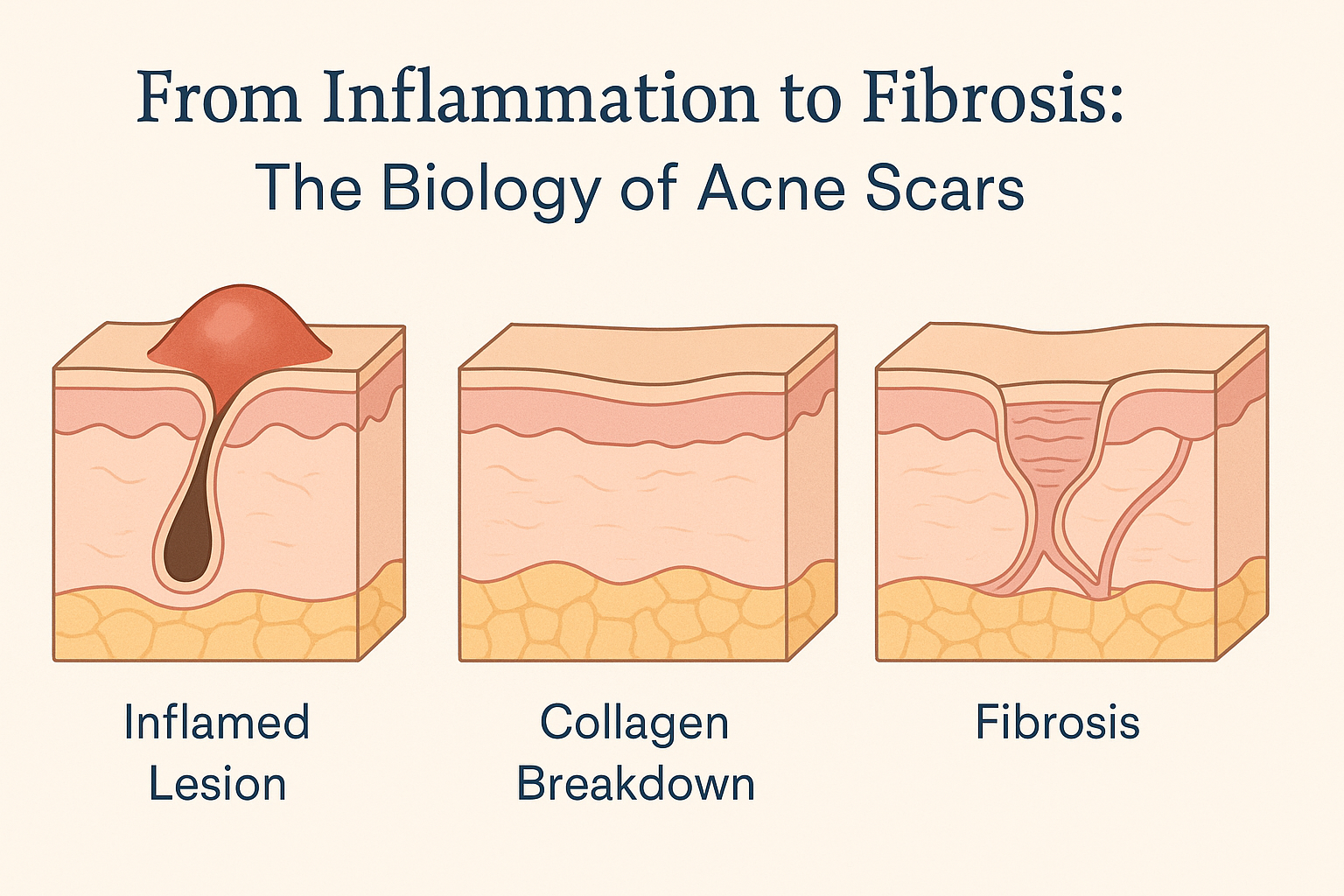
Every acne lesion begins with inflammation. When pores become blocked by oil and dead skin, bacteria trigger the immune system to fight back. White blood cells flood the area, releasing enzymes and inflammatory molecules that destroy infected tissue. Unfortunately, this “battle” often damages surrounding collagen and elastin—the vital support structures that give your skin its smooth texture.
If the inflammation is deep or prolonged, the skin’s natural healing response becomes chaotic. Instead of rebuilding normal collagen, the body forms dense, disorganized tissue—a process called fibrosis. These fibrotic bands tether the skin downward, creating the indentations we recognize as acne scars.
The Transition From Inflammation to Fibrosis
Fibrosis is the body’s attempt to heal, but it can lead to lasting deformity. During this stage, fibroblast cells produce excessive Type I collagen, forming stiff, rope-like bands that pull on the skin.
This explains why topical treatments like lasers can’t reach the true source of the problem—the fibrotic connections lie beneath the skin surface.
Studies have shown that inflammation triggers prolonged fibroblast activation and overexpression of TGF-β (Transforming Growth Factor Beta), the key molecule responsible for scar tissue formation. Understanding this biological pathway allows surgeons like Dr. Sadove to develop precise, targeted interventions.
Why Acne Scar Surgery Works When Creams and Lasers Don’t
While over-the-counter solutions target surface texture, true acne scars are structural problems below the dermis.
Surgical acne scar repair directly addresses the fibrotic bands and tissue loss caused by fibrosis.
Common techniques include:
- Subcision: A blunt needle is inserted under the scar to release tethered collagen bands, allowing the skin to rise naturally.
- Fat Grafting: Restores lost volume and provides regenerative stem cells to improve healing.
- Microsurgical Excision or Punch Techniques: Precisely remove or lift individual scars for smoother skin.
- Adjunctive Treatments: Once the foundation is corrected, less invasive treatments may refine the surface even further.
At The Acne Scar Center, Dr. Sadove often combines subcision and fat grafting for a comprehensive biologic repair—freeing the scar and replenishing the tissue beneath it.
Understanding Collagen Remodeling After Surgery
Once fibrotic bands are released, the healing process begins anew—this time under controlled conditions.
The body replaces old, disorganized collagen with new, elastic fibers. This process continues for months, gradually improving texture and tone.
To support optimal healing, Dr. Sadove provides personalized recovery protocols focusing on:
- Gentle compression and sun protection
- Avoiding inflammation-inducing skincare
- Nutritional and regenerative support for collagen synthesis
Why Some People Scar More Than Others
Genetics, skin tone, and the severity of acne inflammation all play a role.
People with prolonged inflammatory acne or delayed treatment are more likely to develop fibrosis. Hormonal fluctuations, immune response differences, and even stress hormones can amplify inflammation, increasing the likelihood of scarring.
Recognizing your unique skin biology is essential—there’s no one-size-fits-all solution. That’s why all treatment plans at The Acne Scar Center begin with a Virtual Consultation and a detailed photographic analysis of your scars.
Long-Term Results and Skin Health Restoration
Once the underlying fibrosis is treated, skin texture and contour can be restored permanently. Most patients experience dramatic improvement in both appearance and confidence. While scars never “vanish” entirely, Dr. Sadove’s surgical approach transforms severe acne scarring into smooth, natural-looking skin that reflects your true self—not your past acne.
- What is Your Acne Scar Type? → https://acnescarflorida.com/acne-scar-types/
- Schedule A Consultation → https://acnescarflorida.com/contact-us/
At The Acne Scar Center, we specialize exclusively in the surgical treatment of acne scars—offering scientifically proven methods designed for lasting results. If you’re ready to understand your unique skin biology and start your transformation, Book a Virtual Acne Scar Consultation today.
FAQs
1. Can acne scars go away naturally?
Mild pigmentation or redness may fade over time, but true acne scars caused by fibrosis require targeted treatment to correct.
2. What causes some acne to scar while others heal normally?
Prolonged inflammation, genetic factors, and delayed treatment increase the risk of scar tissue formation.
3. How soon after acne clears should I consider scar treatment?
Once active acne is under control, it’s safe to begin scar evaluation. Earlier intervention can prevent long-term collagen loss.
🎥 Watch Dr. Richard Sadove explain the science behind acne scars — from inflammation to fibrosis — and how surgical repair with your own natural fat can restore smoother, stronger skin.